News & Updates
MDFCSC Regional Study Tour in Rwanda explores Cyber Domain and Smart technologies
October 29, 2026
The Malawi Defence Force Command and Staff College (MDFCSC) conducted a seven-day regional study tour in Rwanda for participants in Senior Command and Staff Course No. 5, Academic Year 2026. The tour followed the theme “Approaches to Leveraging Cyber Domain Capabilities and Smart Technologies in Building National Resilience.”
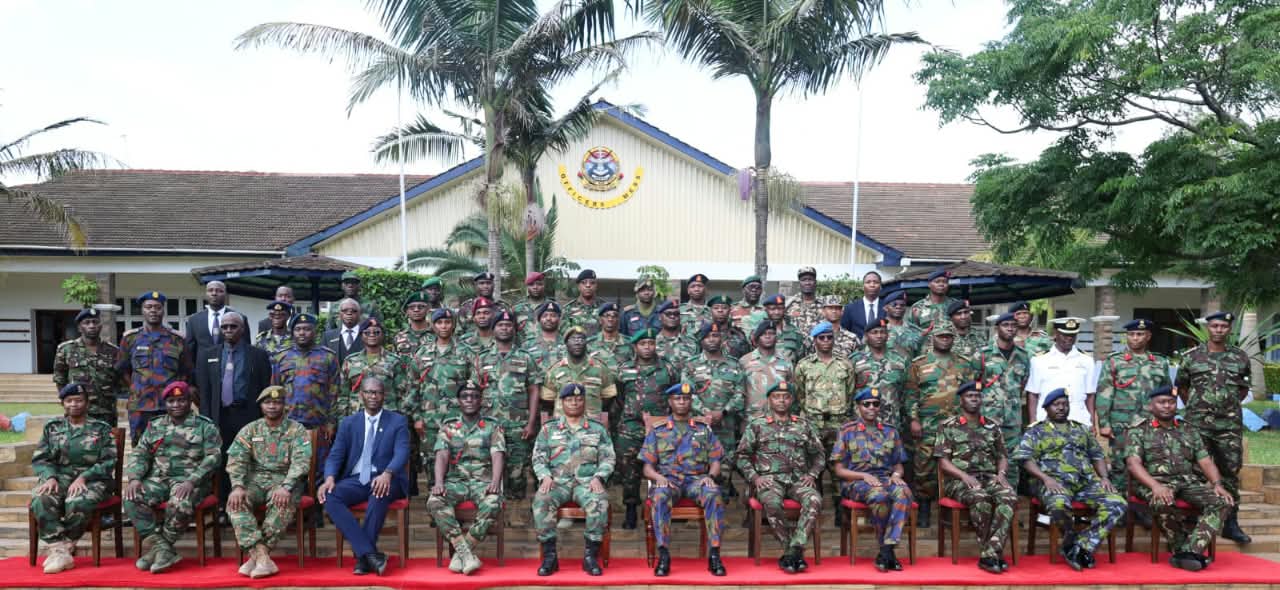
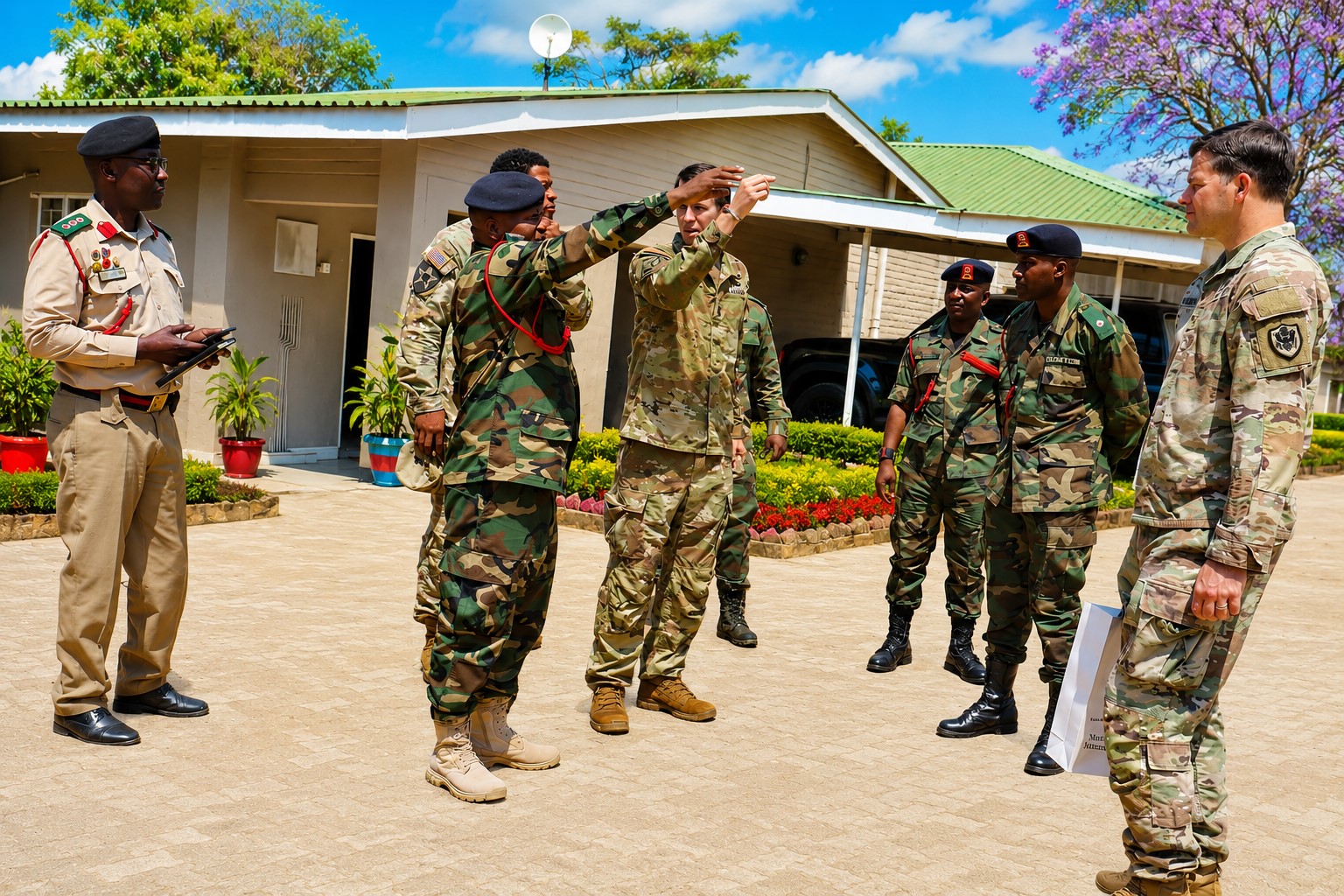
The course was divided into two study groups, with Team Rwanda undertaking study activities in Rwanda and Team Kenya conducting a parallel tour in Kenya. Visits covered policy and regulatory institutions, security agencies, defence education establishments and development partners. They examined how legal, policy and institutional frameworks work together to strengthen national resilience to emerging cyber threats.
The tour supported the course’s strategic focus on national and sectoral strategy analysis and development. It provided practical exposure to how security strategies are formulated and implemented in the evolving information environment. Building on a local study tour in Malawi in July 2026, the regional engagements enabled participants to benchmark national approaches and identify lessons relevant to Malawi. Rwanda and Kenya were selected as useful regional case studies for their ICT development and growing cyber security capabilities. Rwanda ranks among the seven African states in the highest tier of the International Telecommunication Union (ITU) Global Cybersecurity Index 2024.
Team Rwanda was led by Deputy Commandant Colonel Joseph Mambo, while Team Kenya was led by MDFCSC Commandant Major General Vincent Moyo. Team Rwanda comprised fifteen student officers from the course nominal roll, together with the directing staff. The research paper was supervised by Lieutenant Colonel R M Masese ‘psc’ (BW). The tour took place from 4 to 10 October 2026.
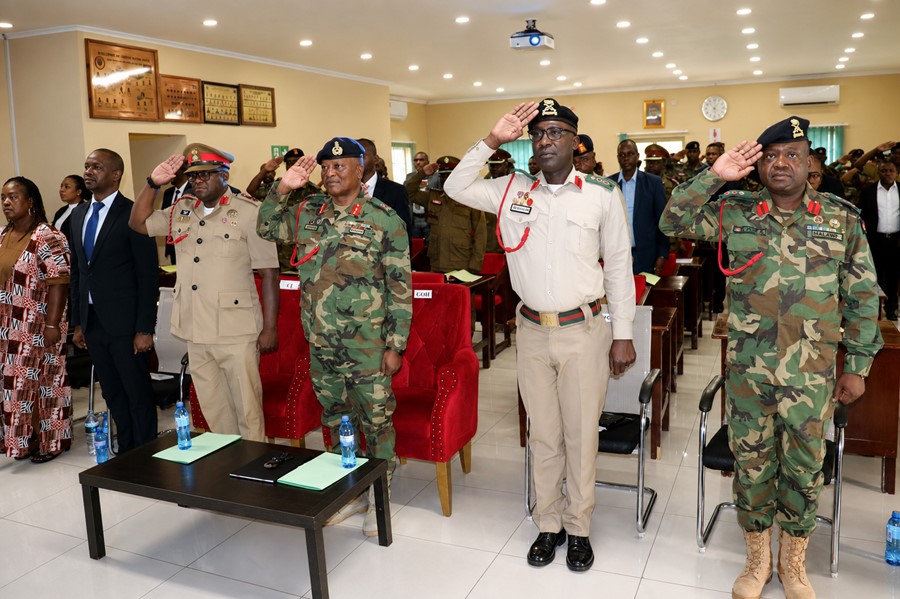
The programme began on 5 October with contextual visits to the Kigali Genocide Memorial Site and the Campaign Against Genocide Museum. These engagements provided historical grounding for the study of national resilience and the institutions that underpin it. The delegation was briefed on Rwanda’s pre-independence, post-independence and post-genocide trajectories. The delegation was also briefed on how the genocide was planned, executed and halted, and on how the country has rebuilt after the 100 days of darkness to where it is today. The academic programme proper opened on 6 October with a visit to Rwanda Defence Force (RDF) Headquarters, where the delegation, led by the MDFCSC Chief Instructor, Col Joseph MAMBO, paid a courtesy call on the Chief of Defence Force for Rwanda Defence Force after receiving briefings. The same day, the team received a presentation from the Rwanda Military Hospital, the Military Medical Institute and related facilities on how digital platforms support continuity of essential services.
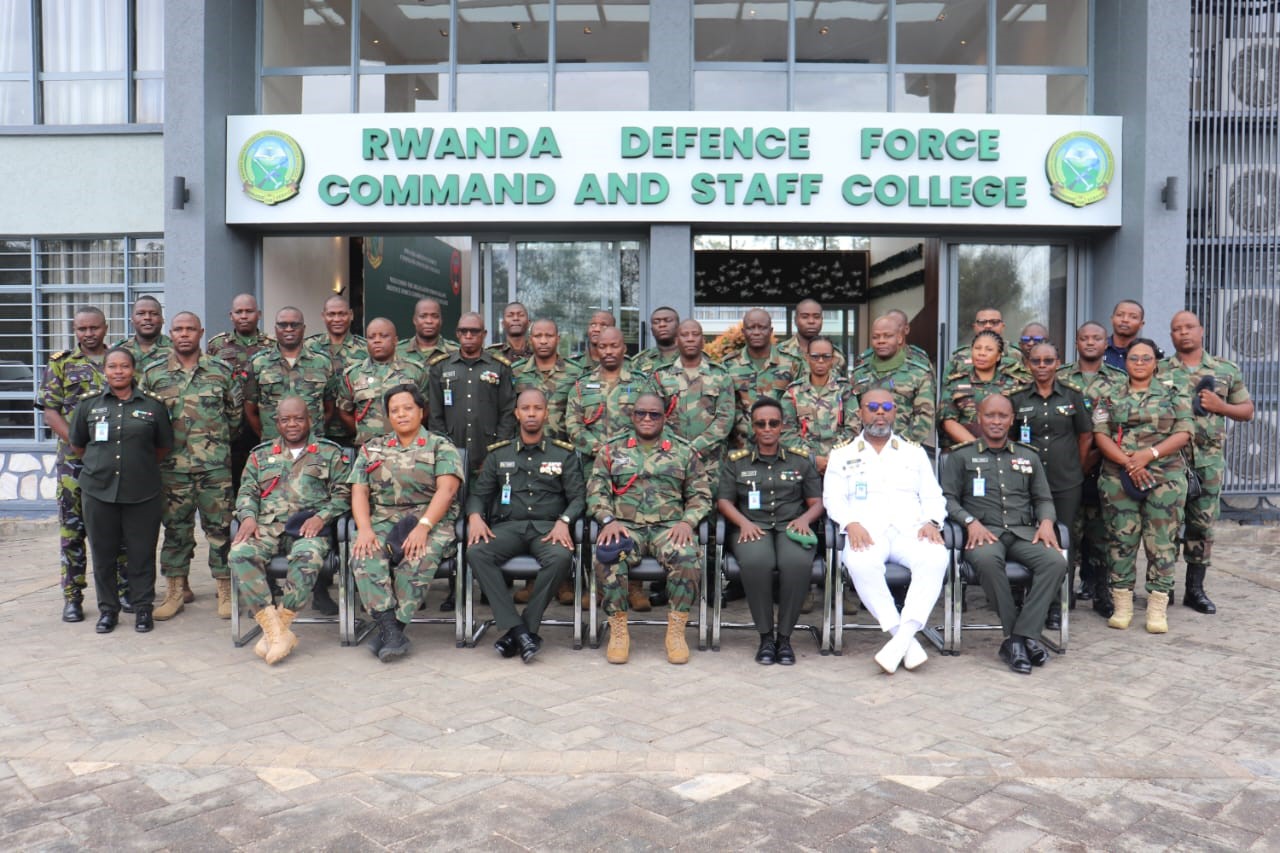
On 7 October, the delegation travelled to the RDF Command and Staff College at Nyakinama. The College outlined its curriculum, including the cyber warfare module taught by specialists from the National Cyber Security Authority (NCSA), and the practice of teaching cyber, drone and electronic warfare together. The College leadership took the student around the College, providing an orientation on several issues. It was explained that the RWANDA Defence College is going paperless to align with the government’s policy of going digital across all services. It was noted that everything at the College is done digitally, including the planning process. The visit reinforced professional links between the two staff colleges and offered direct insight into how defence education prepares officers for the information environment.
On 8 October, the team met with Rwanda Cooperation, the Ministry of Finance and Economic Planning (MINECOFIN) and the Ministry of Foreign Affairs and International Cooperation (MINAFFET). Officials described the depth of Rwanda’s digitisation: approximately 85 per cent of government services online by 2025, 87 per cent of subscriptions mobile, and 77 per cent of adults using mobile money. Platforms such as the Land Administration Management System, the Integrated Financial Management Information System, digital identity from birth, and the national public service platform were presented as both instruments of service delivery and tools of accountability. The team noted that this depth of digitisation also widens the attack surface that national cyber arrangements must defend.
On 9 October, the delegation visited the Ministry of ICT and Innovation and the National Cyber Security Authority. MINICT holds policy responsibility for broadband, cyber security, data sharing and artificial intelligence, while NCSA, established under Law No. 26/2017, holds operational responsibility for protection, standards, national coordination, cybercrime and data protection. Briefings covered ongoing awareness programmes tailored to demographic groups, critical information infrastructure protection with a focus on the finance sector, threat monitoring, research and international cooperation. The team noted that national coordination is stated as a responsibility of all government institutions to ensure the success of digitalisation and to achieve the 2050 goals.
Across the engagements, the team examined how SMART technologies contribute to the plan-and-prepare, absorb, recover, and adapt functions of resilience. Evidence was strongest for preparation and absorption: security testing before deployment, standards applied at system integration, disaster recovery sites, parallel systems, and the combination of fibre and 4G connectivity. Recovery was described in general terms. Adaptation, systematic lessons-learned loops, and measurement of resilience benefits were not evidenced. A consistent local build preference was observed at multiple levels, justified by customisation, control of integration, and retention of skills in-house.
Coordination across joint, interagency, intergovernmental and multinational layers was clearest in education and in outward warning. NCSA specialists teach the staff college cyber module; threat warnings are disseminated from NCSA to agencies; external links include FIRST, the African CSIRT body, and team-to-team exchange. The precise role of the RDF in a national cyber incident response, and the return path for information to the NCSA hub, were not established during the tour.
The comparative analysis with Malawi highlighted a structural difference rather than a purely financial one. Rwanda separates cyber policy (MINICT) from operational protection (NCSA) and frames the mandate in terms of national security and sovereignty. Malawi concentrates both functions within the communications regulator under the Electronic Transactions and Cyber Security Act 2016, with mwCERT subordinate, without independent legal standing, and without ring-fenced funds. On critical national infrastructure, Malawi’s draft Cybersecurity Bill 2024 is ahead of Rwanda in providing for a formal register. Transferable practices identified for the Malawi Defence Force and MDFCSC include continuing awareness programmes, a skills pipeline from early education, standards for system integration, a cyber module taught by the national cyber body, network hardening before operations, and security testing before deployment. Structural choices, including the separation of policy from operations and a security rather than purely regulatory mandate, require national decision-making.
The tour concluded on 10 October 2026. Team Rwanda’s Research Leader and the student officers reported that the eight engagements with ten host institutions had yielded sufficient data to address the study objectives, despite the limited time available for cyber-specific work. Overall, the visits provided practical insights into institutional arrangements, the contribution of SMART technologies to resilience functions, the limits of interagency coordination as currently described, and the lessons that a resource-constrained African state can realistically apply. The central conclusion of the research is that Rwanda’s advantage lies in arrangement rather than acquisition, and that the depth of digitisation increases what must be defended without, by itself, improving the means of defending it.
Lt Col PP MWANDUZA and Maj H J MSOWOYA - Students